Eye to Eye with a Leatherback Sea Turtle
A life-size bronze sea turtle is coming to Avila Beach Park: a tribute to the giant, ancient mariners who cross the entire Pacific to feed off our coast.
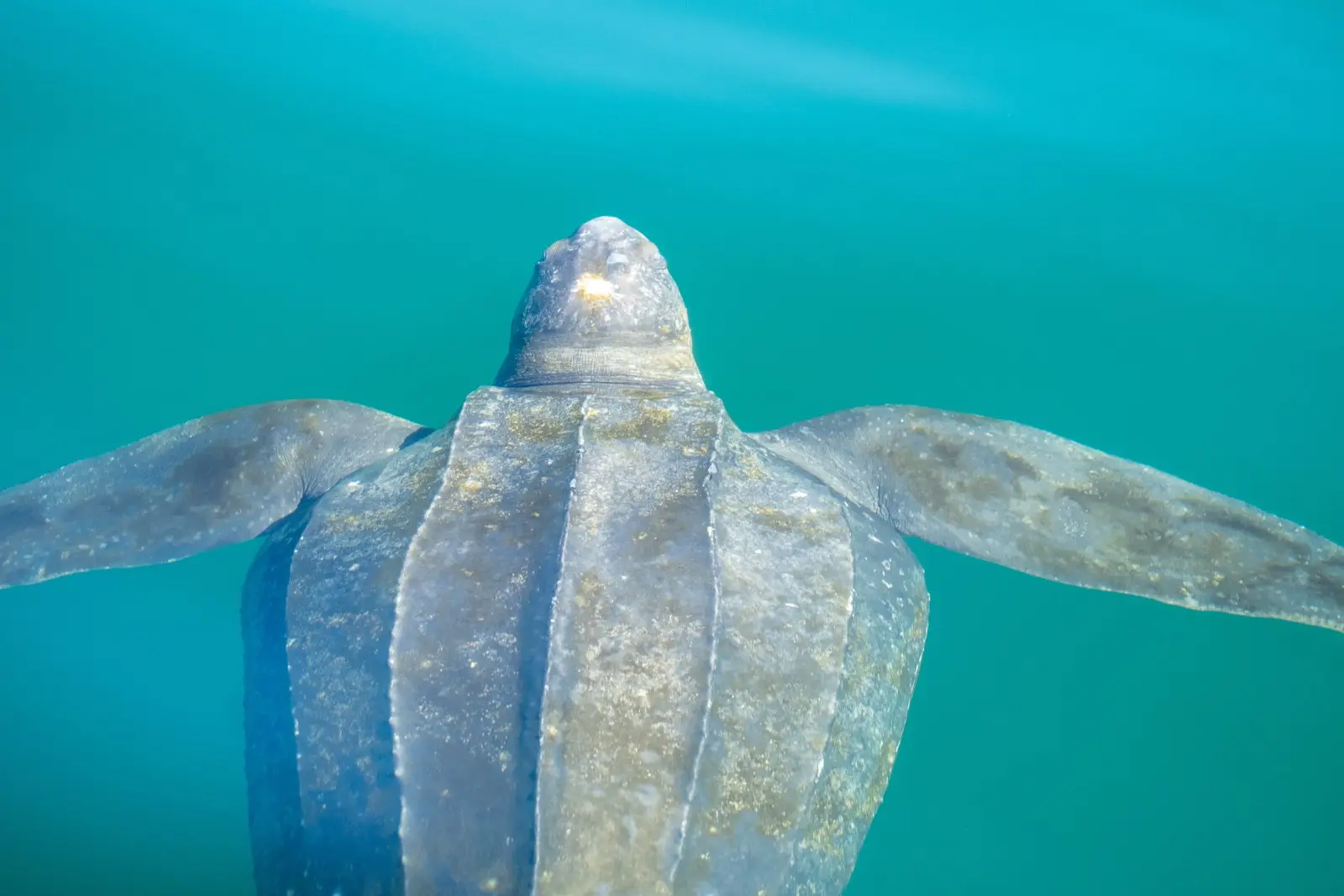
While the leatherback sea turtle holds the distinction of being California’s official state marine reptile, many residents are unaware that these prehistoric giants — the largest sea turtles in the world — frequent local waters to forage on abundant jellyfish.
Adult leatherbacks can reach lengths of eight feet and weigh up to 2,000 pounds. These massive reptiles migrate over 7,000 miles from nesting beaches in the tropical West Pacific to the California coast, arriving between June and November to feast on seasonal prey. This arduous journey exposes them to significant human-caused threats, including entanglement in fishing gear, vessel strikes, and the ingestion of marine plastics. With the West Pacific population critically endangered and as few as 1,500 mature individuals remaining, every conservation effort is vital to the species’ survival.
The Sculpture: A Bronze Leatherback, Cast to Scale
Designed by acclaimed artists Pamela Blotner and John Pearson, the striking 8-foot, life-size bronze sculpture at Avila Beach Park will serve as a poignant reminder that these magnificent animals are not merely symbols of nature but living neighbors in our Pacific waters.
Interpretive signage nearby will explain leatherback biology and their role in California’s waters.
Finding the Statue
RIBBON-CUTTING Thursday, October 15, 2026, 5–5:30 p.m.
WHERE Avila Beach Community Park, corner of Front and San Juan
Celebrate Pacific Leatherback Day: the public is warmly invited to join the ribbon-cutting ceremony at the leatherback statue.
AQUARIUM TALK Saturday, October 17, 2026, 2–3 p.m.
WHERE Central Coast Aquarium, 50 San Juan Street
A talk about leatherback sea turtles at the Central Coast Aquarium, free with the price of Aquarium admission. Space is limited.
The sculpture will stand in Avila Beach Park at 50 San Juan Street, beside the Central Coast Aquarium and a short walk from the promenade and the pier.
Driving south from San Luis Obispo: take the Avila Beach Drive exit and follow it west for about three miles into the village.
Driving north from Pismo Beach or Santa Maria: take the same Avila Beach Drive exit and turn west, again about three miles to the village.
Parking: use the public lots off Avila Beach Drive and First Street, then walk down toward Front Street. The village is small enough to cross on foot, and the park sits between the aquarium and the beach.
Meet the Leatherback
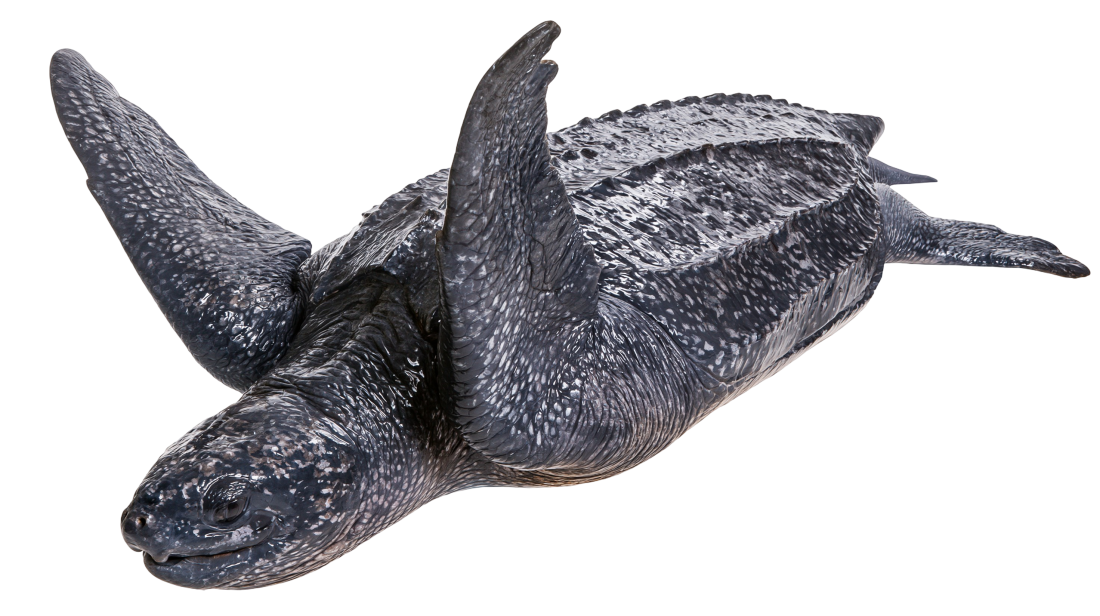
A Living Dinosaur, Built for the Deep
- Colossal creatures: adult Pacific leatherbacks average 5 to 6 feet long and 750 to 1,000 pounds, but they can grow 8 feet long and weigh 2,000 pounds.
- Modern dinosaurs: leatherbacks outlived Tyrannosaurus rex. They have navigated Earth’s oceans for 70 million years.
- No hard shell: their flexible, leathery carapace compresses under pressure, allowing routine dives to 1,000 feet and record dives below 4,400 feet — outdiving most marine mammals.
- Efficient swimmers: streamlined ridges on the carapace and hydrodynamic flippers minimize water resistance, enabling long migrations and speed bursts up to 25 mph.
- Deep breaths: leatherbacks routinely hold their breath for 10 to 15 minutes while foraging, but can stretch a single breath to 85 minutes by slowing their heart rate to conserve oxygen.
- Adapted for cold: giant bodies, thick fat and specialized blood vessels in the flippers let leatherbacks withstand water below 50°F — the threshold for cold-stunning among hardshell sea turtles.
- Pink spot: a translucent patch on the skull exposes the pineal gland, a biological calendar that helps time migrations by detecting seasonal changes in day length.
- Lost years: leatherbacks take 8 to 15 years to reach maturity. Scientists call this the “lost years” because so little is known about juvenile sea turtles.
DID YOU KNOW?
The world’s largest sea turtle visits our coast every summer, just to eat jellyfish.
How to Help
Small choices, made by people on this coast, add up for leatherbacks.
1
Choose local seafood caught with selective methods, like pole and line, that avoid bycatch.
2
Say no to single-use plastics. Leatherbacks can confuse floating bags and other plastics with jellyfish, their favorite meal.
3
Ask local officials to support policies that protect migrating leatherbacks.
4
Choose local goods over transoceanic shipping to help reduce the risk of vessel strikes.
About the Project
The project was spearheaded by the Monterey-based nonprofit Upwell Turtles, with significant support from the Swift Family, the Avila Beach Tourism Alliance and the Avila Beach Community Foundation, along with other generous anonymous donors.
The installation was made possible through partnerships with San Luis Obispo County Parks and Recreation, the Central Coast Aquarium, Gaia Graphics, the Urena-Elenes Family and Artworks Foundry.
Upwell is a 501(c)(3) nonprofit working to protect West Pacific leatherback sea turtles along the U.S. West Coast.


 Your Privacy Choices